Who Am I?
I`m a regular AEP student trying to finish this project. My initials are M.H. My name is Michael Hernandez. That`s who I am. This part of my project is a timeline from 1950-1970, explaining important historical events which happened between those years. I have only 30 events as I was told to do. I hope you enjoy my website.
1950-1955
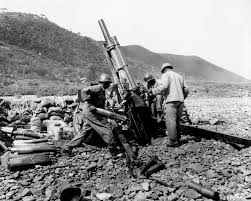
The Korean War 1950:
On June 25th, 1950, the North Korean army held a surprise attack against the South Korean army and the U.S. force stationed in the country. Then they headed towards the capitol, Seoul, Korea. President Truman ordered land, air, and sea forces to strike and called it a “police action”. The Korean and U.S. forces went into North Korea, but this caused many Chinese forces to intervene in the late 1950’s. This war lasted 3 years with many casualties. More than 55,000 U.S. troops were killed in this war.
The Korean War was the first war after World War II. The United States government intervened in order to protect South Korea and avoid this war from becoming a third world war. This war did not have a popular support from the Americans, nor was it victorious as World War II for the U.S.
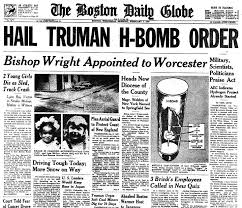
Truman Hydrogen bomb order 1950:
In January 1950, President Truman decided to continue the research and production of nuclear weapons. Many people found this to be very controversial. During this time, David Lilienthal, chairman of the Atomic Energy Commission, had strong reservations about continuing this further. By July 25, 1950, President Harry Truman wrote to Crawford H. Greenewalt, President of E.I. du Pont de Nemours and Company, and asked him to take over the design, construction and operation of the bomb. By 1951 Operation Greenhouse was established. This was a series of nuclear tests conducted at Eniwetok Atoll. The purposes of these tests were to help reduce the size, weight and material of this nuclear weapon.
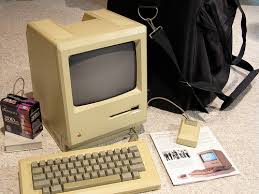
Computers have arrived 1950:
The first commercially produced computer was built by the Engineering Research Associates of Minneapolis. The U.S. Navy was the very 1st customer. This computer held 1 million bits of its magnetic drum. The magnetic drum was the earliest form of storage device. They stored as much as 4,000 words and retrieved it in about 5 seconds.
The National Bureau of Standards set specific guidelines in Washington. This laboratory was used for testing components and systems in order to set computer standards. Technology was becoming more reliable with greater use in the 1950’s.
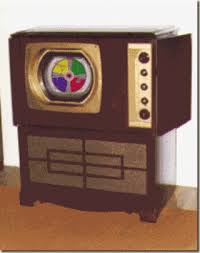
The first color t.v and first colored broadcast 1951:
It was June of 1951 that CBS made history by presenting an hour long program with 16 stars that performed song, dance and comedy routines. The best part was that it was in color. Before that night, television was an entirely black and white medium. Viewers had heard that Lucille Ball's hair was red, but the color wasn't something they actually saw on their television sets. That first color broadcast was hyped as a breakthrough in television technology, but there were some flaws. The performers' faces were pasty. There was a mysterious red ring around Ed Sullivan's ear and viewers questioned the true tone of Faye Emerson's blond chignon. Then there was the even larger problem—no one had color televisions. Very few people actually watched that first broadcast because their black and white sets could not receive the signal. To insure the event wasn't lost, CBS invited small audiences to watch the variety program in 35 different television studios across the east coast. Meanwhile, 1000 people had enough foresight to retrofit their sets to receive the signal. For the record, CBS gets credit for the first color broadcast. However, a color system developed by the Radio Corporation of America (RCA) was accepted by the Federal Communications Commission (FCC) as the industry standard.
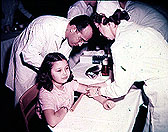
Polio vaccine 1953:
In 1953 Salk reported his findings in The Journal of the American Medical Association. A nationwide testing of the vaccine was launched in April 1954 with the mass inoculation of school children. The results were amazing -- 60-70 percent prevention -- and Salk was praised to the skies. But suddenly, some 200 cases of the disease were caused by the vaccine and 11 people died. All testing was halted. It seemed that people's hopes were dashed until investigators found that the disease-causing vaccine all came from one poorly made batch at one drug company. Higher production standards were adopted and vaccinations resumed, with over 4 million given by August 1955. The impact was dramatic: In 1955 there were 28,985 cases of polio; in 1956, 14,647; in 1957, 5,894. By 1959, 90 other countries used Salk's vaccine.
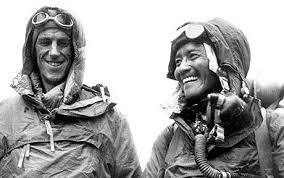
The first to climb Mount Everest 1953:
At 11:30 a.m. on May 29, 1953, Edmund Hillary of New Zealand and Tenzing Norgay, a Sherpa of Nepal, become the first explorers to reach the summit of Mount Everest, which at 29,035 feet above sea level is the highest point on earth. The two, part of a British expedition, made their final assault on the summit after spending a fitful night at 27,900 feet. News of their achievement broke around the world on June 2, the day of Queen Elizabeth II’s coronation, and Britons hailed it as a good omen for their country’s future.
Mount Everest sits on the crest of the Great Himalayas in Asia, lying on the border between Nepal and Tibet. Called Chomo-Lungma, or “Mother Goddess of the Land,” by the Tibetans, the English named the mountain after Sir George Everest, a 19th-century British surveyor of South Asia. The summit of Everest reaches two-thirds of the way through the air of the earth’s atmosphere–at about the cruising altitude of jet airliners–and oxygen levels there are very low, temperatures are extremely cold, and weather is unpredictable and dangerous.
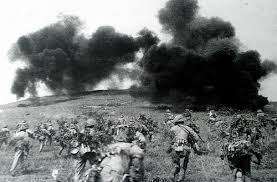
The French Defeat 1953 :
In northwest Vietnam, Ho Chi Minh’s Viet Minh forces decisively defeat the French at Dien Bien Phu, a French stronghold besieged by the Vietnamese communists for 57 days. The Viet Minh victory at Dien Bien Phu signaled the end of French colonial influence in Indochina and cleared the way for the division of Vietnam along the 17th parallel at the conference of Geneva. In November 1953, the French, weary of jungle warfare, occupied Dien Bien Phu, a small mountain outpost on the Vietnamese border near Laos. Although the Vietnamese rapidly cut off all roads to the fort, the French were confident that they could be supplied by air. The fort was also out in the open, and the French believed that their superior artillery would keep the position safe. In 1954, the Vietnamese army, under General Vo Nguyen Giap, moved against Dien Bien Phu and in March encircled it with 40,000 Communist troops and heavy artillery.
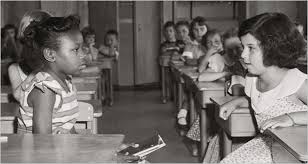
Segregation in school ends 1954:
In 1954 segregation ruled to be illegal. This ruling occurred in May 17, 1954 to be “inherently unequal” was due to the case of Brown vs. Board of Education. This case was started when a little girl, Linda Brown of Topeka, Kansas, was not allowed to attend the nearby all white school. Her family and other supporters sued the board of education and it later became that ‘separate but equal’ was unjust. This case was supported by two educational psychologists Kenneth and Mamie Clark, who provided evidence that children at an early age can become habituated to dislike colored people due to segregation. This evidence allowed the Supreme Court to rule an end to segregation in public schools.
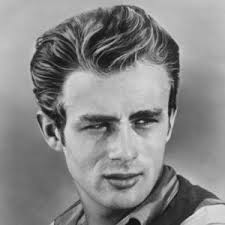
James Dean dies 1955:
On this day in 1955, movie star James Dean dies at age 24 in a car crash on a California highway. Dean was driving his Porsche 550 Spyder, nicknamed “Little Bastard,” headed to a car race in Salinas, California, with his mechanic Rolf Wuetherich. They were then involved in a head-on collision with a car driven by a 23-year-old college student named Donald Turnaspeed. Dean was taken to Paso Robles War Memorial Hospital, where he was pronounced dead at 5:59 p.m. Wuetherich, who was thrown from the car, survived the accident and Turnaspeed escaped with minor injuries. No charges were ever filed against him.
Dean rose to stardom in 1955 with his role as Cal Trask in East of Eden. He reportedly beat out Paul Newman for the part. Dean’s performance in the film, based on the John Steinbeck novel, earned him a posthumous Academy Award nomination for Best Actor. It was the first time in Oscar history that an actor was nominated after his death.
